Introduction: Why Railways Need a New Operating Paradigm
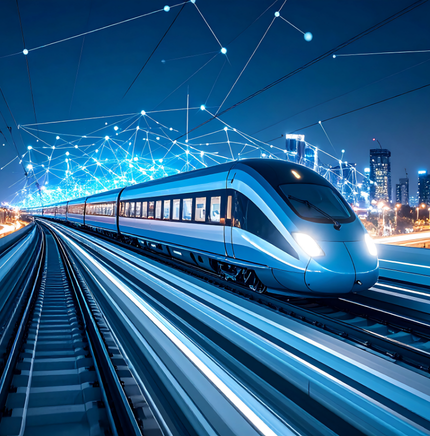
The global railway industry is at a pivotal moment. Increasing passenger volumes, rising freight demand, aging infrastructure, and the need for safer and more sustainable transportation systems are forcing operators to rethink traditional operating models. For decades, rail networks have relied on reactive maintenance practices, manual inspections, and fixed operational procedures. While these methods have enabled reliable service, they are becoming increasingly inadequate for modern rail networks that require higher efficiency, greater resilience, and faster decision-making. This transformation has led to the emergence of the Cognitive Railway, an intelligent and connected ecosystem powered by artificial intelligence, digital twins, predictive analytics, and advanced automation.
From Reactive Railways to Cognitive Rail Networks
Historically, rail operators have focused on responding to failures after they occur or performing maintenance according to predetermined schedules. Both approaches result in inefficiencies, unnecessary costs, and service disruptions. Cognitive Railway systems introduce a proactive operating model that continuously monitors network conditions, asset health, and operational performance. By leveraging real-time data and predictive intelligence, railway organizations can identify risks before they become failures, optimize resources, and improve service reliability. This shift from reactive to predictive operations represents one of the most significant changes in railway management in decades.
The Technology Foundation of the Cognitive Railway
The Cognitive Railway is enabled by a combination of interconnected technologies that create continuous visibility across the network. Intelligent sensors, edge computing platforms, machine learning models, digital twins, and data analytics engines work together to collect, process, and act upon operational information. These technologies transform railways from infrastructure-centric organizations into data-driven enterprises capable of making faster and more informed decisions.
Across Europe and other mature rail markets, the adoption of AI in Railway Engineering is accelerating as operators seek smarter ways to manage aging infrastructure, improve asset utilization, and comply with stringent safety requirements. By combining engineering expertise with advanced analytics, rail organizations are creating intelligent networks capable of adapting to changing operational conditions in real time.
IoT, Sensors, and Real-Time Data Collection
Modern railways generate vast amounts of data from tracks, rolling stock, signaling systems, wheelsets, bearings, traction motors, and wayside assets. Through advanced IoT Sensor Integration for Railway Monitoring Solutions, intelligent devices continuously monitor vibration patterns, temperature fluctuations, acoustic signatures, and asset performance indicators. This continuous stream of operational intelligence forms the foundation for predictive maintenance, operational optimization, enhanced safety management, and data-driven decision-making across the network.
Edge AI and Computer Vision for Continuous Rail Inspection
Track inspection has traditionally been labor-intensive and dependent on dedicated inspection vehicles and manual assessments. Today, high-resolution cameras and edge AI platforms mounted on passenger and freight trains can inspect rail infrastructure during normal operations. Advanced computer vision algorithms automatically identify rail defects, switch anomalies, missing fasteners, damaged components, and infrastructure degradation. This approach increases inspection frequency, improves accuracy, and accelerates maintenance response times while reducing operational costs.
Digital Twins: Creating a Virtual Railway
Digital twins are becoming a cornerstone of modern railway transformation strategies. A digital twin provides a virtual representation of physical assets, signaling systems, or even an entire rail network. By continuously synchronizing operational and engineering data, these models enable operators to simulate traffic scenarios, predict asset degradation, evaluate maintenance strategies, and validate system changes before deployment. Digital twins reduce risk, improve planning accuracy, and support more effective investment decisions.
The growing adoption of Digital Twin Solutions for Rail Infrastructure Engineering is allowing operators to gain unprecedented visibility into network performance. By replicating physical assets and infrastructure digitally, railway organizations can evaluate operational scenarios, assess asset degradation trends, validate engineering changes, and optimize maintenance schedules with significantly reduced risk and cost.
AI-Powered Traffic Management and Network Optimization
Network congestion, delays, maintenance work, and unexpected disruptions can significantly impact railway performance. Artificial intelligence is transforming traffic management by enabling real-time optimization of train schedules, routing decisions, and network utilization. Hybrid AI systems combine machine learning algorithms with rule-based railway domain expertise to support dispatchers and operations teams. These solutions enable faster disruption recovery, improved timetable adherence, and increased line capacity without requiring major infrastructure expansion.
Case Study: Railcar Graph Optimization
One of the practical applications of intelligent rail operations involves railcar configuration and routing optimization. By representing large railway networks as graph-based structures and applying advanced optimization engines, operators can determine the most efficient routes for railcars across yards, terminals, and rail corridors. This approach improves railcar utilization, reduces congestion, minimizes delays, and generates measurable operational savings while providing dispatchers with real-time visibility into network conditions.
Reinventing Rail Asset Inspection Through Vision AI
Vision-based inspection systems are transforming how rail operators assess asset health. Deep learning models trained on extensive datasets can detect rail breakages, track geometry issues, joint bar defects, switch gap anomalies, and gauge deviations with high accuracy. Automated alert generation allows maintenance teams to focus on critical issues immediately. As a result, railways can move from periodic inspections to continuous infrastructure monitoring, significantly improving asset reliability and safety.
Condition-Based Maintenance: Moving Beyond Fixed Schedules
Condition-Based Maintenance represents a major evolution in railway asset management. Instead of replacing components according to predefined schedules, operators use real-time condition data to determine maintenance requirements. This strategy helps reduce maintenance expenditure, extend asset lifecycles, and minimize service interruptions. By understanding the true health of infrastructure and rolling stock assets, railway organizations can allocate maintenance resources more efficiently and maximize return on investment.
Predictive Monitoring of Rolling Stock and Traction Motors
Rolling stock reliability directly affects service availability and passenger satisfaction. Advanced monitoring technologies enable continuous diagnostics of wheels, bogies, bearings, and traction motors. Solutions such as Motor Current Signature Analysis can identify early indicators of motor faults without requiring invasive inspections. Machine learning models analyze operational data and detect subtle anomalies before they lead to failures. This enables planned interventions that reduce downtime, improve fleet availability, and extend component life.
Building Safer Railways with Intelligent Collision Detection
Safety remains a top priority across the railway ecosystem. Modern collision detection and warning systems combine cameras, radar, LiDAR, GPS, and edge intelligence to create comprehensive situational awareness for operators and maintenance personnel. These systems can identify potential risks, provide real-time alerts, and support automated response mechanisms such as emergency braking. Such capabilities are particularly important for maintenance-of-way vehicles operating in complex and challenging environments.
Quantum Computing: The Next Frontier in Railway Engineering
As railway networks become increasingly interconnected, operational complexity continues to rise. Quantum computing has the potential to address optimization challenges that are difficult for conventional computing systems. Future applications may include timetable optimization, fleet management, routing decisions, asset allocation, and defect detection. While still evolving, hybrid quantum-classical solutions offer exciting possibilities for solving large-scale operational problems faster and more efficiently.
Shift-Left Engineering and Virtual Commissioning
The railway industry is increasingly adopting a shift-left development philosophy that moves testing and validation earlier in the engineering lifecycle. Through virtual commissioning, Hardware-in-the-Loop simulation, and digital twin environments, engineers can validate signaling systems, train control software, and operational scenarios before deployment. This approach reduces risk, lowers commissioning costs, accelerates project timelines, and improves overall system quality.
The Road Ahead: Building the Railway of the Future
The Cognitive Railway is far more than a technology initiative; it represents a strategic transformation in how rail networks are managed, maintained, and optimized. By integrating artificial intelligence, predictive maintenance, digital twins, computer vision, and intelligent automation, operators can improve safety, increase network capacity, reduce costs, and enhance customer experience. As railways continue their digital journey, organizations that embrace cognitive technologies will be best positioned to meet future mobility demands while delivering sustainable and reliable transportation services.
Conclusion
The future of rail transportation will be defined by intelligence, connectivity, and proactive decision-making. Organizations that partner with a trusted Cognitive Railway Solutions Provider can accelerate their digital journey through End-to-End Digital Railway Transformation Services for Scalability, leveraging AI, digital twins, IoT-enabled monitoring, predictive analytics, and intelligent automation. These technologies are helping rail operators build safer, smarter, and more efficient networks while unlocking new opportunities for operational excellence and sustainable growth.