

AdTech 2.0: The Privacy-First Revolution in Digital Advertising
Digital advertising has decisively moved into its second act. The foundation of the business is shifting away from identity to intelligence. With Google recently pushing back its timeline on fully deprecating third-party cookies in Chrome and shifting towards a user choice model, the broader ecosystem challenges run deep.
Read Article

Tata Elxsi and Evergent Launch Unified Digital Storefront for Media and Telecom Operators
Introducing Subscription Hub, a ready-to-deploy digital storefront and marketplace that delivers intelligent bundling, and seamless multi-service monetization.
Read more

AI & DeepSeek - Perspective for Media & Entertainment
The industry leaders discuss the implications of AI & DeepSeek and its impact on low-cost inference compute for the M&E industry.
Watch Webinar
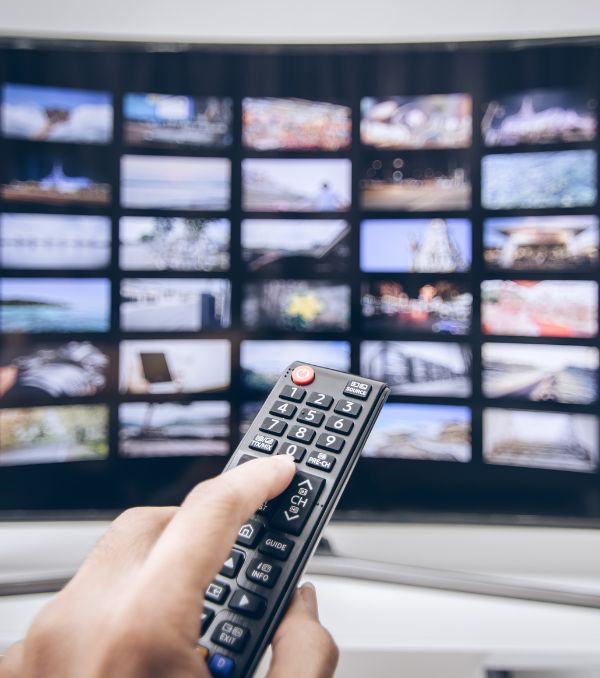
Tata Elxsi Wins “Best in Linear Distribution” Award for OSNTv Box
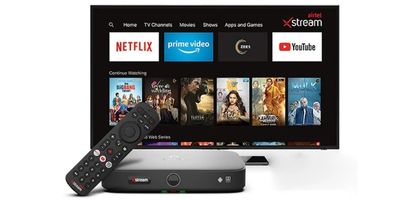
Tata Elxsi powers a premium entertainment experience for OSNtv subscribers - Wins the BroadcastPro Manufacturer Award.
Read moreThe Future of Media & Entertainment Solutions
Global media and entertainment companies are navigating a profound industry transformation driven by shifting consumer expectations, platform convergence, and the rapid evolution of media technology. As the media and entertainment industry embraces AI-driven decision-making, cloud-native workflows, FAST ecosystems, and immersive digital experiences, organizations are increasingly focused on delivering differentiated engagement, accelerating content monetization, and building resilient operating models for long-term growth.
Tata Elxsi delivers strategic media and entertainment solutions that help enterprises translate these opportunities into measurable business outcomes. Combining deep media and entertainment consulting expertise with advanced digital media solutions, Tata Elxsi enables next-generation OTT experiences, intelligent content delivery, and AI-powered infrastructure modernization. Leveraging analytics, cloud media services, and proven media and entertainment technology services, Tata Elxsi helps clients improve audience retention, simplify operational complexity, and optimize costs. For over 15 years, Tata Elxsi has partnered with a leading US MSO to establish a global engineering center driving automation, cybersecurity, GenAI adoption, and post-deployment transformation.
Transforming Video Delivery in LATAM
Business Opportunities
Meeting the demands of dynamic audiences, delivering uninterrupted content across multiple platforms, and managing operational efficiency at scale remain key priorities for media and entertainment companies. Evolving consumer preferences, rising delivery complexity, and competitive market pressures are accelerating investments in digital media technology, broadcast solutions, cloud media services, and media and entertainment software development to drive sustainable growth and innovation.




What's New











Partnerships & Alliances


In Focus





Information Hub
-
How are media and entertainment companies building new content monetization and revenue models?
Media and entertainment companies are building new content monetization models by blending subscription, advertising, and transactional revenue into flexible, hybrid offerings. Growth areas include FAST channels, ad-supported (AVOD) and hybrid tiers, intelligent bundling, and privacy-first addressable advertising. Success depends on data-driven personalization and dynamic ad insertion that lift engagement without eroding experience. Increasingly, AI in media and entertainment powers pricing, recommendation, and churn-prediction decisions, while digital media solutions unify billing, entitlements, and multi-service commerce. The result is diversified, resilient revenue as viewer behavior shifts across platforms, devices, and global markets.
-
How can media companies use data and analytics to personalize content and reduce churn?
Media companies reduce churn by using data and analytics to personalize content, recommendations, and the entire viewing experience. By unifying behavioral, demographic, and quality-of-experience data, digital media solutions surface what each viewer wants and predict who is likely to lapse. Machine learning and AI in media and entertainment power recommendation engines, dynamic content ordering, and timely retention offers, while analytics expose engagement drop-off and performance bottlenecks. Continuous testing refines interfaces and personalization over time. Applied well, these digital media services raise retention, lift watch-time and monetization, and turn first-time viewers into loyal, high-value subscribers.
-
How are 5G and next-generation networks changing content delivery and immersive experiences?
5G and next-generation networks are transforming content delivery by enabling faster, lower-latency streaming and richer immersive experiences across devices. Higher bandwidth supports high-resolution and real-time interactive formats - live sports, cloud gaming, AR/VR, while edge computing brings processing closer to viewers to cut buffering. For the media and entertainment industry, this advance in media technology enables reliable mobile-first delivery, personalized live experiences, and new immersive formats at scale. Combined with cloud media services and adaptive streaming, 5G helps providers deliver consistent quality of experience globally, even during peak demand, unlocking next-gen engagement and monetization opportunities.
-
How do media and entertainment companies safeguard content security and combat piracy across distribution?
Media and entertainment companies safeguard content by combining encryption, digital rights management (DRM), forensic watermarking, and secure, cloud-native distribution end to end. Multi-DRM and token-based authentication protect premium and live content, while forensic watermarking traces leaks to their source. Cloud media services add secure delivery, access controls, and continuous monitoring to detect and shut down piracy in real time. A zero-trust approach and hardened media technology solutions protect assets from ingest through playback across every device and market. Strong content protection preserves revenue, licensing relationships, and brand trust as distribution expands globally across platforms and regions.
-
How is the industry modernizing legacy broadcast infrastructure?
The industry is modernizing legacy broadcast infrastructure by shifting from hardware-based, on-premises systems to software-defined, IP-based, and cloud-native workflows. Broadcast solutions now virtualize playout, master control, and distribution, replacing fixed appliances with scalable cloud media services that flex with demand. Migration is typically phased and standards-based - running new and existing pipelines in parallel to protect live operations supported by specialized broadcast engineering services. This transition lowers capital cost, speed channel launches (including FAST channels), and enables remote, automated operations. The outcome is agile, resilient broadcasting that unifies linear and streaming delivery across platforms and markets.
-
What is ContentOps, and how is it modernizing the media content supply chain?
ContentOps is the practice of aligning the people, processes, and technology that move media content from creation through management to multi-platform distribution. It modernizes the content supply chain by replacing fragmented, manual steps with open-source, cloud, and AI-driven workflows. Using automation and AI in media and entertainment, ContentOps streamlines ingest, metadata tagging, quality control, versioning, and localization, so content reaches every platform faster. Unified digital media services and media technology reduce duplication, turnaround time, and cost. The result is a scalable, resilient content operation that improves speed-to-market and consistency across OTT, broadcast, and emerging channels worldwide.
-
How are operators modernizing and managing CPE devices (set-top boxes, gateways) at scale?
Operators modernize and manage CPE devices, set-top boxes and gateways at scale by standardizing on open frameworks like RDK and adopting cloud-based, remote device management. Consistent media and entertainment software development enables over-the-air updates, unified monitoring, and faster feature rollout. Cloud media services centralize telemetry, while AI in media and entertainment powers predictive diagnostics and proactive self-healing that resolve issues before viewers notice, cutting field visits and costs. Tata Elxsi enables this through connected-home and RDK engineering and its iCX platform, keeping large, heterogeneous device fleets secure and reliable across markets.