The subscription video-on-demand (SVoD) market in emerging economies is experiencing explosive growth. The Asia-Pacific region alone, excluding China, is projected to surpass 500 million SVoD subscriptions by 2029, a staggering increase from the 317 million recorded at the end of 2023 (Media Play News, June 10, 2024). As global giants and local players vie for this fast-expanding audience, the conventional wisdom that a vast content library and competitive pricing are enough to win is quickly becoming obsolete. The new battleground is user experience (UX) for streaming services. In a market defined by immense diversity and fast-changing behaviors, victory will belong not to the biggest but to the smartest, those who master the art and science of hyper-personalized, context-aware UX.
The New Battle Ground for Screen Time
For streaming services, the primary competition is no longer other streamers. It is screen time, and the most formidable rivals are adjacent segments like social media and user-generated content platforms. These new-age media technologies have fundamentally reshaped user behaviour. The era of spending hours to a single screen is fading; today's consumers, particularly the tech-savvy Gen Z, have significantly shorter attention spans and consume content in bite-sized portions across an ecosystem of devices.
To stay relevant, media companies must embrace an ecosystem approach. This means moving beyond a siloed focus on smartphones and smart TVs to understand the entire constellation of a user's digital touchpoints, right from public transit displays to social media feeds. Reaching a user is about being present and relevant within their unique digital ecosystem, whether they are a Gen Z user with a low attention span or a retired individual with more time for long-form content.
The Hyper-Personalization Mandate
For years, UX for streaming services has relied on broad user personas to guide its strategy. However, this one-size-fits-all approach is not effective in diverse markets like India or Southeast Asia. The future lies in moving beyond static personas to understanding the fluid context of individual users.
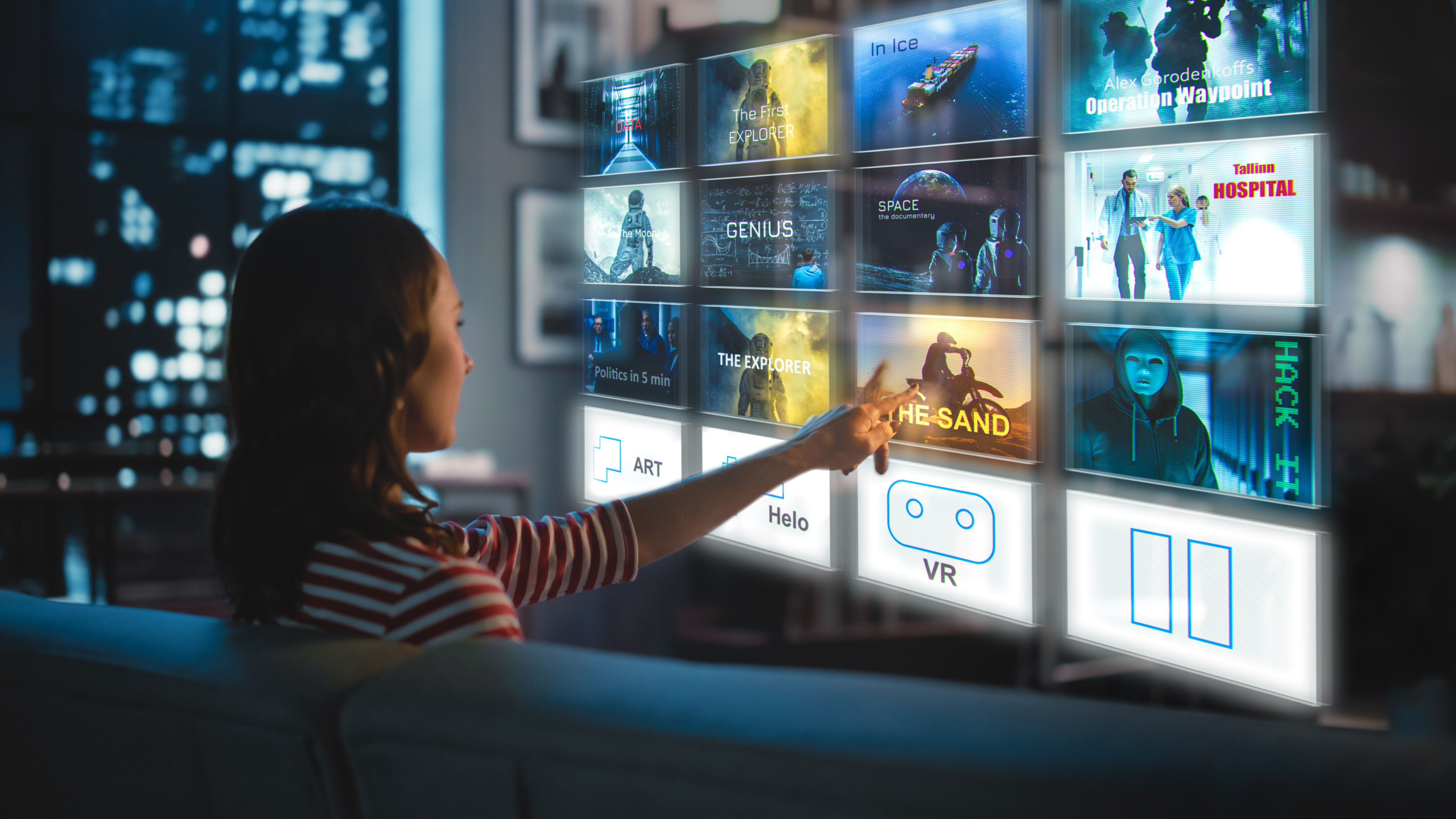
A single user exhibits different behaviors and needs throughout the day. For instance, on a weekday morning, an average family is looking for quick news updates or short-form content that fits into a busy schedule. But on a Friday night, the same platform should recognize that they are settling in for a family movie night and proactively suggest a new release or a classic film. True personalization requires eliminating the data silos between content, subscription, and customer platforms to create a single, holistic view of the consumer.
But achieving this view is an organizational challenge before it is a technical one. The most forward-thinking media companies are breaking down the traditional walls between Product, Engineering, Marketing, and Content. They are creating cross-functional 'squads' dedicated to specific parts of the customer's journey, ensuring that the entire organization is structured to see and serve the individual, not just the demographic.
From Reactive to Predictive with the Power of Agentic AI
The next evolution in UX for streaming services is the shift from a reactive model to a proactive model. Traditionally, platforms react to user actions— a click, a search, or a support query. The future, however, is predictive, anticipating user needs before they even arise.
This extends beyond content recommendations. Imagine a system that proactively addresses service disruptions by detecting network fluctuations and initiating self-healing protocols before the user notices a lag. This is the power of Agentic AI.
However, building this capability in streaming services requires a phased approach. We advise clients to 'Crawl, Walk, Run.'
- Crawl: Start by unifying data sources to create that essential single customer view.
- Walk: Then, move from generic recommendations to rule-based personalization for key segments.
- Run: Finally, leverage Agentic AI for true one-to-one, predictive experiences that feel seamless and intuitive.
Measuring What Matters
For too long, the industry has equated subscriber numbers with success. But this is a vanity metric if churn is high. A superior UX for streaming services reveals its value in deeper, more meaningful data. The true measures of success are:
- Engagement Depth: Are users finishing what they start?
- Session Diversity: Are they exploring different types of content?
- Reduced Time-to-Content: How quickly and effortlessly do they find something to watch?
Focusing on these KPIs is how you measure a service that users truly value, not just subscribe to.
Context is the New Currency
As subscription fatigue grows, advertising remains a critical revenue stream. Yet, disruptive, irrelevant ads are primary drivers of churn. The innovation lies in contextual advertising that enhances the viewing experience.
Consider a talk show featuring a sports personality. Instead of a jarring commercial break, AI can dynamically place relevant brand promotions for sports apparel or cars subtly into the video stream. This provides advertisers with a highly engaged audience, and, for the user, the ads feel less like an intrusion and more like a natural part of the content.
The Winning Formula
In this crowded market, the winners will not be the companies with the deepest pockets or the largest library. Rather those, that master the art of user experience for streaming services. The winning formula is a combination of diverse content library, a deep understanding of user context, and a seamless, predictive UX. The players who can solve the core user problem of finding relevant content effortlessly will be the ones to capture the loyalty of the next billion screens.
Author
Manager - Business Strategy & Experience Design
Tata Elxsi