Electric heavy equipment succeeds or fails on its software, not just its battery cells. The battery management system (BMS), working with charging, thermal and drivetrain controls, decides how much of a costly battery pack an OEM can safely use on every shift. That decides productivity, warranty exposure and total cost of ownership. This article explains what that software must do in construction, mining and agricultural machines. It also explains how OEMs can engineer and validate it with less risk.
Why are heavy equipment OEMs electrifying now?
Off-highway electrification has moved from pilot projects to policy priority, because non-road machinery is now seen as a major emissions source. In November 2025, the International Council on Clean Transportation (ICCT), the Climate and Clean Air Coalition and C40 Cities launched a partnership at COP30 in Belém to speed up zero-emission non-road machinery. [1, 2] They said the non-road sector emits over 1 billion tonnes of CO2, 3 million tonnes of methane and 250,000 tonnes of black carbon a year, which exceeds the climate footprint of the global maritime sector. They added that construction machinery contributes around 40% of those emissions. [1] ICCT’s partnership materials also say that in major markets non-road equipment drives 50–70% of particulate matter and about 30% of nitrogen oxide emissions from mobile sources. [1]
In the US, the pressure is strongest in California. Executive Order N-79-20 directs the California Air Resources Board (CARB) to pursue strategies to eliminate emissions from off-road equipment by 2035, where feasible. [3] Under CARB’s amended In-Use Off-Road Diesel-Fueled Fleets Regulation, a fleet that adds a qualifying zero-emission machine can delay phasing out an older diesel unit by two years. [4] CARB’s 2025 technology list already counts 334 electric construction and mining equipment models. [5] Federally, EPA Tier 4 standards, phased in from 2008 through 2015, required PM and NOx emissions to be reduced by about 90% from earlier tiers. [6, 7] In Europe, Stage V (Regulation (EU) 2016/1628) added particle-number limits. [8] In Oslo, 77% of machinery on municipal construction sites was already zero-emission by 2023, and emission-free construction equipment became mandatory for all public projects from 2025. [9]
Adoption is still early, especially in the US. Off-Highway Research data cited by Construction Briefing in March 2026 puts battery-electric machines at under 1% of US excavator and wheel loader sales in 2025. In China, battery-electric models were 42% of wheel loader sales. [10] The same analysis notes that electric machines can cost more than double their diesel equivalents. It also notes they convert 80–90% of energy into work, against 20–40% for diesel, and may cut maintenance costs by 25–50%. [10] For OEMs, the lesson is clear: sustainable off-highway vehicles will win on total cost of ownership, and software that gets more usable life and uptime out of each battery is a key lever.
How is electric heavy equipment different from a passenger EV?
Heavy equipment puts far harsher and less predictable demands on the battery than a passenger car. Machines dig, lift and push in short, high-power bursts. They work through dust, vibration, heat and cold, and they often run far from a reliable grid connection. A 2026 study in the International Journal of Automotive Technology found that a 30-ton excavator on high-load excavation days used more than 700 kWh of energy in a single day. [11]
| Requirement |
Passenger EV |
Electric heavy equipment |
| Duty cycle |
Mostly steady driving, predictable |
High-power bursts, hydraulic peaks, long idle periods |
| Energy use |
Measured per mile |
Measured per shift; can exceed 700 kWh a day for large excavators |
| Charging |
Public and home networks, standard connectors |
Job sites with limited grid access; mobile chargers, battery containers or overnight depot charging |
| Environment |
Paved roads, climate-controlled garages |
Dust, vibration, mud, extreme heat and cold |
| Loads beyond driving |
Cabin heating and cooling |
Hydraulics, implements, PTO and work functions |
| Safety frameworks |
ISO 26262 (road vehicles) |
Machinery-specific standards, e.g. ISO 25119 (agricultural machines) and ISO 14990 (electrical safety of earth-moving machinery) |
| Business metric |
Range and price |
Uptime, productivity per shift and total cost of ownership |
Table 1: Passenger EV vs. electric heavy equipment requirements.
These differences are why a car BMS cannot simply be dropped into an excavator or loader. The control strategy has to be built around the machine’s work cycle.
What does BMS software actually do in electric heavy equipment?
A battery management system is the electronic “guardian” of the battery pack. It measures, estimates, protects and reports, many times every second. [12] In heavy equipment its main jobs are:
- Monitoring: It tracks cell voltage, current and temperature across hundreds of cells.
- State of charge (SoC) estimation: It calculates how much usable energy is left. It acts as the machine’s “fuel gauge,” which matters when an operator must finish a task before charging.
- State of health (SoH) estimation: It tracks how much the battery has aged. This drives warranty decisions, residual value and maintenance planning.
- Cell balancing: It evens out charge between cells so the weakest cell does not limit the whole pack.
- Protection: It prevents overcharge, over-discharge, overcurrent and over-temperature. It also detects early signs of thermal runaway, a self-heating fault that can lead to fire. [12, 13]
- Power limits: It tells the vehicle controller how much power the pack can safely deliver or accept right now, for example during a heavy dig or regenerative lowering of a boom.
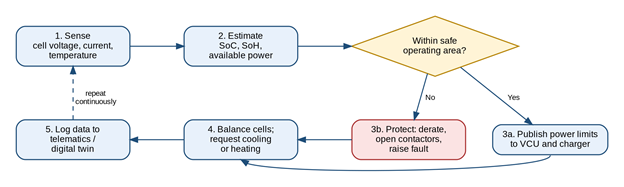
Figure 1: Simplified BMS control loop for electric heavy equipment.
Good estimation is a financial lever, not just an engineering detail. If SoC and SoH estimates are uncertain, engineers must hold back larger safety margins. That means carrying more battery than the job needs, and battery technology is still the biggest single cost in an electric machine.
How should charging software be integrated for job-site operations?
Charging software must match the realities of the job site, where grid access is often limited. Construction Briefing’s 2026 analysis notes that reliable charging access is often missing on remote or temporary job sites. It also notes that containerized power remains costly, and that overnight charging limits continuous operation outside semi-permanent sites such as quarries and mines. [10] On Oslo’s Sophies Minde project, ICCT reported that batteries typically allowed 6–8 hours of operation with lunchtime charging. The project manager estimated that electric machines need about 10–15% more units on site to match diesel capacity, because of downtime during charging. [9] CARB’s 2025 list already tracks 88 alternative charging solutions, including mobile and battery-buffered chargers. [5]
On the machine, charging integration means coordinating the on-board charger, the DC-DC converter and the BMS. Together they negotiate safe charging current with the charger, manage pack temperature during fast charging, and protect the battery when the power supply is unstable. Charging software and thermal software must be designed together, because charge rates are often limited by temperature.
Why is thermal management control critical?
Thermal management keeps cells in their ideal temperature window, and that window drives power, charging speed and battery life. Heavy equipment works in both desert heat and sub-zero cold. On Oslo’s fully electric Sophies Minde construction project, ICCT reported that battery capacity fell by 40% when temperatures dropped to −25 °C. [9] Thermal control software decides when to cool, when to heat, and when to derate power. Those decisions trade productivity now against battery life later.
How do the electric powertrain, VCU and telematics fit together?
Electric powertrain engineering in heavy equipment is a systems-integration problem. The vehicle control unit (VCU) acts as the “supervisor.” It takes operator commands and the BMS power limits, then directs the motor and inverter controllers that drive traction and hydraulic pumps. Telematics links the machine to the fleet’s back office for remote monitoring, predictive maintenance and over-the-air (OTA) software updates.
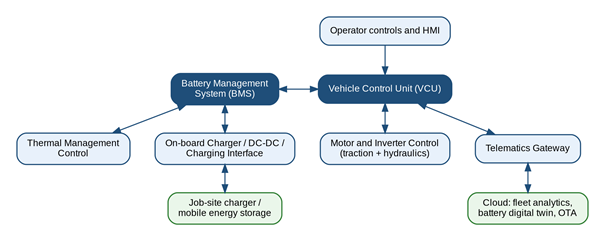
Figure 2: Electric heavy equipment software stack.
How should OEMs validate and certify this software?
Validation should start early, in simulation, and move to hardware-in-the-loop (HIL) testing before a physical prototype ever digs a trench. HIL testing connects the real controller hardware to a real-time simulation of the battery, motor and machine. Engineers can then safely test extreme loads, climate extremes and fault scenarios that would be dangerous or expensive to stage in the field.
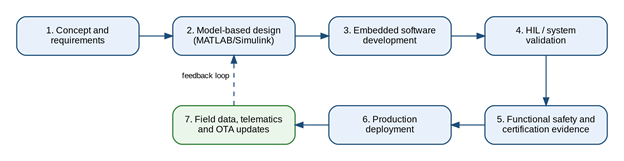
Figure 3: OEM electrification software development lifecycle.
Functional safety, the discipline of ensuring systems behave safely when faults occur, must run through every stage. The right standard depends on the machine. ISO 26262 covers road vehicles, ISO 25119 covers tractors and agricultural and forestry machinery, and ISO 14990 covers electrical safety in electrically driven earth-moving machines. OEMs should map their safety case to the machine category and target markets early in the program.
Key takeaways
- Off-highway electrification is driven by emissions policy (CARB, EPA Tier 4, EU Stage V and city mandates) and total cost of ownership. US adoption is still under 1% for core machine types, so there is room to lead.
- Electric heavy equipment needs BMS, charging and thermal software built for high-power, harsh and unpredictable duty cycles, not carried over from passenger cars.
- Accurate SoC and SoH estimation lets OEMs use more of each battery, which directly improves cost and uptime.
- The VCU, motor and inverter controls, BMS and telematics must be designed as one system. ECU consolidation raises the stakes for validation.
- HIL testing and machine-appropriate functional safety (such as ISO 25119 or ISO 26262) reduce program risk before field trials.
- Frequently asked questions
What is a BMS in electric heavy equipment?
A battery management system is the control software and electronics that monitor every cell, estimate state of charge and state of health, balance cells, and protect the pack from overcharge, over-discharge, overcurrent and overheating. In heavy equipment, it also tells the vehicle controller how much power the machine can safely use during high-load work.
Why can’t OEMs reuse passenger EV BMS software in construction or mining machines?
Heavy equipment has burst-heavy duty cycles, hydraulic loads, harsh environments and limited job-site charging. A large excavator can use more than 700 kWh on a heavy day, so estimation, thermal and power-limit strategies must be tuned to machine work cycles. [11]
What regulations are pushing off-highway electrification in the US?
California leads. Executive Order N-79-20 targets eliminating off-road equipment emissions by 2035 where feasible, and CARB’s off-road fleet rule rewards adding zero-emission machines with a two-year phase-out delay for older diesel units. [3, 4] Federally, EPA Tier 4 standards limit diesel PM and NOx. [7]
What is HIL testing and why does it matter for electric heavy equipment?
Hardware-in-the-loop testing connects real controllers to a real-time simulation of the battery, motor and machine. It lets engineers test extreme loads, climates and faults safely and early. Tata Elxsi says its ready-to-use HILS frameworks reduce validation costs by 40–50%. [14]
Which functional safety standards apply to electric off-highway machines?
It depends on the machine. ISO 25119 applies to tractors and agricultural and forestry machinery. ISO 14990 addresses electrical safety of electrically driven earth-moving machines. ISO 26262 applies to road vehicles and is often used as a reference for EV components. [16]
Build your electric heavy equipment software with confidence
Electrifying a loader, excavator or tractor is ultimately a software and integration challenge. Tata Elxsi brings BMS, power electronics, motor control and HIL validation capabilities, along with off-highway engineering experience. Together these help OEMs move from concept to validated, production-ready electric powertrain engineering faster. Talk to Tata Elxsi’s off-highway electrification team to explore how we can support your next electric machine program.