The character of modern warfare is evolving rapidly, with defense superiority no longer defined solely by platforms, weapons, or connectivity, but by the ability to transform data into actionable intelligence. In this new era, trusted AI will be a key enabler of faster decisions, operational resilience, and mission success.
AI will not replace defense judgement; it will reshape how intelligence is generated, validated, and acted upon. The opportunity is not merely to deploy AI, but to engineer trusted AI-enabled systems that can operate safely, securely, and reliably in mission-critical environments.
At DefTech Bharat Expo 2026, Biswajit Biswas, Chief Data Scientist at Tata Elxsi, joined industry leaders to discuss how Artificial Intelligence in Defense is transforming national security, enabling smarter operations, and redefining the future of defense and aerospace systems.
From Software-Defined Systems to AI-Driven Intelligence
For decades, defense systems relied on deterministic software designed to execute predefined instructions. While these systems continue to play an important role, modern operational environments demand greater adaptability, responsiveness, and intelligence.
The emergence of Defense AI Solutions is enabling systems that can learn from historical and real-time data, identify patterns, assess risks, and recommend actions with greater speed, scale, and decision support, subject to rigorous validation and human oversight.
Key capabilities enabled by AI include:
- Real-time situational awareness
- Threat detection and anomaly identification
- Mission planning and optimization
- Autonomous decision support
- Predictive intelligence and forecasting
This shift from rule-based systems to intelligent, learning systems is transforming how defense organizations approach mission readiness and operational effectiveness.
The Shift from Networks to Algorithms
Defense modernization has traditionally focused on creating connected platforms and network-centric operations. While connectivity remains important, the strategic focus is increasingly moving toward algorithms.
From surveillance systems and sensor fusion platforms to mission analytics, edge AI and autonomous operations, Defense Analytics and advanced algorithms are becoming the foundation of mission success.
The critical question is no longer:
"How much data can we collect?"
Instead, it is:
"How quickly can we convert that data into operational advantage?"
Organizations that effectively leverage AI-Powered Command and Control capabilities will be better positioned to improve mission outcomes, reduce response times, and support informed decision-making in complex operational environments.
Human-on-the-Loop: The Future of Responsible Autonomy
As AI adoption increases across defense programs, maintaining human oversight remains essential.
This has led to the rise of Human-on-the-Loop Architecture, where AI systems execute rapid analysis and recommendations while trained operators retain decision authority and operational control.
Such architectures provide several advantages:
- Enhanced operational efficiency
- Reduced cognitive burden on personnel
- Faster response to evolving situations
- Improved situational awareness
- Responsible deployment of autonomous systems
Rather than replacing human expertise, AI acts as a force multiplier, augmenting human capabilities and enabling personnel to focus on mission-critical decisions.
This balance between automation and accountability will be vital as nations deploy increasingly sophisticated Autonomous Defense Systems across multiple operational domains.
Preparing for the Era of Hybrid Warfare
Today's security landscape extends far beyond conventional battlefields. Modern threats increasingly combine physical attacks, cyber intrusions, electronic warfare, misinformation campaigns, and digital disruption, creating a complex environment known as hybrid warfare. Addressing these challenges requires defense organizations to adopt technologies capable of identifying threats in real time and responding with precision and speed.
Key enablers include:
- AI-driven threat detection
- Cyber-resilient architectures
- Intelligent surveillance systems
- Predictive risk assessment
- Autonomous monitoring and response
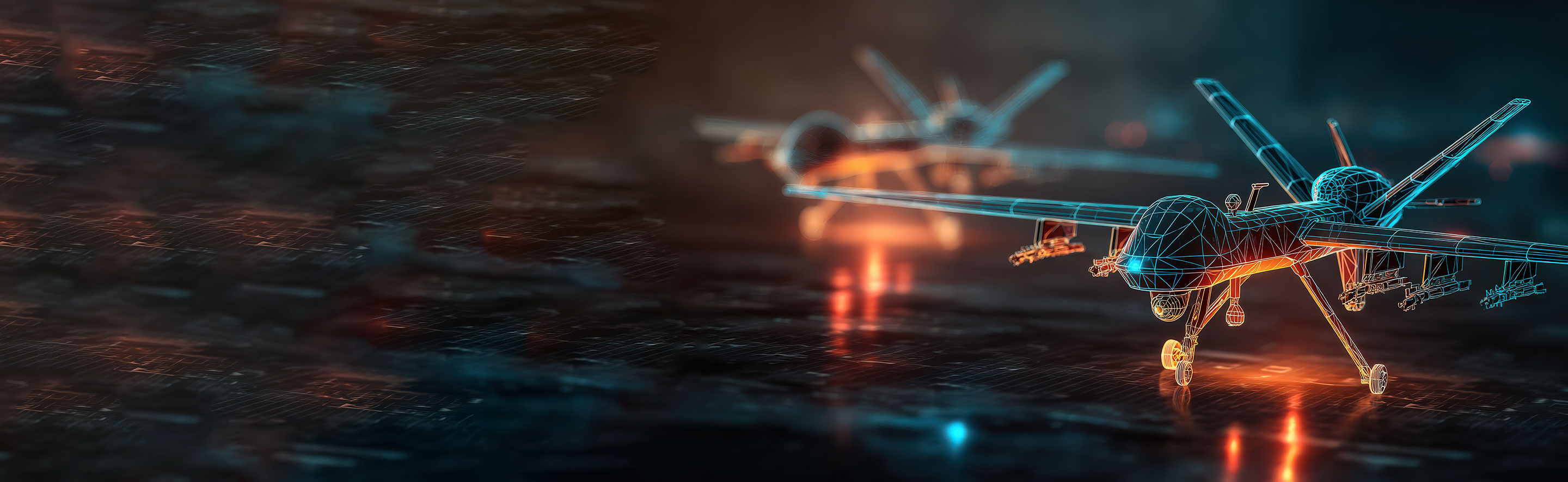
The convergence of Military AI Applications, cybersecurity, and digital engineering is creating a new generation of resilient defense ecosystems capable of operating effectively in increasingly contested environments. A strong example is Tata Elxsi's contribution to HAL's CATS Warrior Unmanned Combat Aerial Vehicle (UCAV), a next-generation loyal wingman platform designed for surveillance, reconnaissance, electronic warfare, strike missions, and autonomous operations. Tata Elxsi contributed to the airframe assembly, fuel storage system, landing gear, and system integration for the demonstrator, demonstrating expertise in complex aerospace and defense engineering execution.
The Growing Role of AI in Aerospace Systems
The aerospace sector is witnessing a similar transformation.
Advances in Aerospace AI are enabling smarter aircraft systems, predictive maintenance, enhanced mission planning, autonomous operations, and improved safety across both civil and defense applications.
As aerospace platforms become increasingly software-defined and connected, intelligent systems will play a vital role in:
- Improving operational efficiency
- Enhancing asset availability
- Reducing lifecycle costs
- Accelerating innovation
The future of aerospace engineering will increasingly depend on the integration of AI in Aerospace Engineering with advanced digital technologies to create adaptive, resilient, and intelligent platforms.
Accelerating Defense Digital Transformation
As defense organizations continue their modernization journey, AI is emerging as a foundational technology driving operational transformation.
The combination of connected platforms, intelligent algorithms, autonomous systems, and advanced analytics is enabling a new era of Defense Digital Transformation.
At Tata Elxsi, we leverage expertise in AI, digital engineering, embedded systems, autonomy, data science, and mission-critical software development to help defense and aerospace organizations accelerate innovation and address emerging challenges.
From intelligent mission systems and advanced analytics to next-generation autonomous platforms, our focus remains on enabling customers to transform data into actionable intelligence and intelligence into mission success.
The Road Ahead
The future battlefield will be defined not only by physical assets but also by intelligence, adaptability, and speed of decision-making.
Organizations that embrace Smart Defense Systems, Defense AI Solutions, and intelligent digital ecosystems will be better equipped to navigate evolving threats and achieve mission superiority.
As AI continues to reshape defense and aerospace operations, the focus will shift from connected systems to intelligent missions, unlocking new possibilities for operational efficiency, resilience, and strategic advantage. The future advantage will come from AI that is not only powerful, but explainable, secure, validated, and operationally usable in mission-critical environments.
Watch the Discussion
Hear Biswajit Biswas, Chief Data Scientist at Tata Elxsi, share his perspectives on how AI is transforming defense and aerospace systems at DefTech Bharat.
Watch the full video:
How AI is Redefining Indias Defense & Aerospace Biswajit Biswas Tata Elxsi
Author
Chief Data Scientist
Tata Elxsi