

Case Study
Improving Suction Efficiency with CFD-Based Chimney Validation
Faster Validation | Smarter Efficiency | Better Decisions
99%
Correlation with the Physical Testing
50%
Reduction in Physical Testing Time
50%
Decrease in Prototyping Time
Background
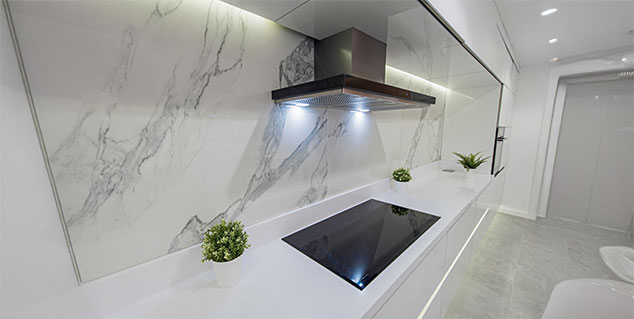
In modern home appliances, kitchen chimneys play a critical role in maintaining indoor air quality during cooking. Studies indicate particulate levels inside homes can rise nearly three times during heavy frying, making effective smoke and odor extraction essential. A global kitchen chimney manufacturer was developing two new design concepts and needed reliable validation before committing to production tooling.
To reduce risk, the company partnered with Tata Elxsi to implement a Computational Fluid Dynamics (CFD) led verification framework capable of simulating real kitchen airflow, temperature variations, smoke behavior, and particle capture efficiency.
Challenges
Although CFD was increasingly used across engineering industries, its application in kitchen chimney development remained relatively new and lacked standardized simulation methodologies. There were no established guidelines for mesh strategies, turbulence models, or boundary conditions tailored specifically for chimney airflow behavior. This uncertainty forced the engineering team to rely on repeated iterations before achieving reliable results.
At the same time, physical validation introduced additional complexity. Testing required tightly controlled environmental conditions, specialized airflow instrumentation, and multiple repeat runs to minimize measurement variance. Every design modification required building a new prototype and scheduling additional testing cycles
For a lean engineering team working under strict timelines, comparing two chimney concepts while managing cost, accuracy, and launch deadlines became increasingly challenging.
Solution
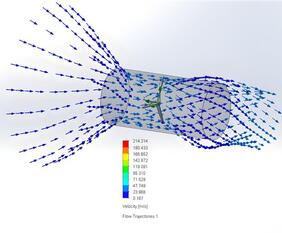
To address these challenges, the engineering team developed a structured CFD methodology using ANSYS Fluent. The process began with building a detailed base-case digital model that replicated a real test kitchen environment, including hood geometry, airflow rates, and temperature-driven plume behavior.
A repeatable meshing strategy was established, followed by carefully defined boundary conditions and turbulence model evaluations. Sensitivity analyses were performed until the simulation results stabilized.
In parallel, a single physical prototype was instrumented to capture airflow velocity, temperature distribution, and capture efficiency metrics. Differences between simulated and experimental results were iteratively refined until strong alignment was achieved, creating a validated methodology capable of accurately predicting chimney performance across multiple design variations.


Impact
Once the CFD workflow was calibrated against the base prototype, simulation evolved into the primary decision-making tool for chimney development. Engineers could confidently evaluate suction efficiency, smoke capture, and airflow behavior under realistic thermal conditions without relying on repeated physical trials. This shift significantly streamlined the validation process and reduced dependency on costly prototype manufacturing.
Instead of waiting for laboratory testing cycles, design teams were able to compare chimney concepts virtually and refine geometry much earlier in the development phase. The standardized CFD methodology now enables faster evaluation of new chimney variants, empowering the manufacturer to innovate more efficiently while maintaining reliable performance validation across future product lines.
Services Rendered
- CFD methodology development for airflow validation
- Design modification and performance optimization
- Base-case prototype development and instrumentation
- Physical testing and simulation correlation
- Virtual validation