

Are You Ready for the EU Packaging & Packaging Waste Regulation (PPWR)?
Assess your readiness across 8 critical compliance dimensions, from technical documentation and supplier data to recyclability, labelling, EPR, and Digital Product Passport.
Start Free AssessmentPPWR Compliance & Sustainability
The Packaging and Packaging Waste Regulation (PPWR) is driving a fundamental shift in how organizations design, assess, and manage packaging across global markets. As PPWR requirements continue to reshape the regulatory landscape, manufacturers are facing increasing pressure to improve recyclability, reduce packaging waste, incorporate recycled content, optimize Extended Producer Responsibility (EPR) costs, and achieve compliance with the evolving EU Packaging Regulation. At the same time, fragmented packaging data, limited supplier transparency, evolving sustainability requirements, and growing scrutiny of environmental claims are making compliance increasingly complex and resource intensive.
Tata Elxsi helps organizations navigate this transition by combining deep regulatory expertise, packaging engineering capabilities, and sustainability-driven innovation. We work with manufacturers to transform compliance from a regulatory obligation into a strategic advantage, helping them make informed packaging decisions, strengthen supply chain transparency, reduce compliance risks, and build future-ready packaging portfolios that support both business growth and circular economy objectives.
Here's How We Help?
Assessing & Prioritizing PPWR Readiness
- Evaluate packaging portfolios through structured PPWR gap analysis & compliance assessments to identify compliance gaps and high-risk packaging components.
- Develop prioritized roadmaps that help organizations accelerate readiness while focusing efforts where they matter most.
Advancing Sustainable Packaging & Circularity
- Improve recyclability, packaging minimization, recycled content performance through comprehensive recyclability assessments and packaging optimization strategies.
- Support packaging redesign and material optimization initiatives that reduce environmental impact and EPR fee exposure.
Centralizing Packaging Data & Supplier Intelligence
- Establish a centralized packaging inventory by consolidating packaging specifications, supplier declarations, and compliance evidence.
- Harmonize packaging data across products, suppliers, and business functions to improve transparency, traceability, and supply-chain collaboration.
Enabling Digital Compliance Visibility
- Leverage AI-enabled assessments, compliance analytics, and packaging intelligence solutions to accelerate PPWR compliance and support Digital Product Passport (DPP) readiness.
- Gain portfolio-level visibility through digital dashboards, compliance monitoring, sustainability reporting, and decision-support insights.
Reducing Compliance Risk & Protecting Market Access
- Identify compliance issues early through structured assessments, supplier engagement, and ongoing regulatory monitoring.
- Reduce redesign costs, compliance delays, regulatory exposure, and potential market access risks across global packaging portfolios.
PPWR Compliance Framework
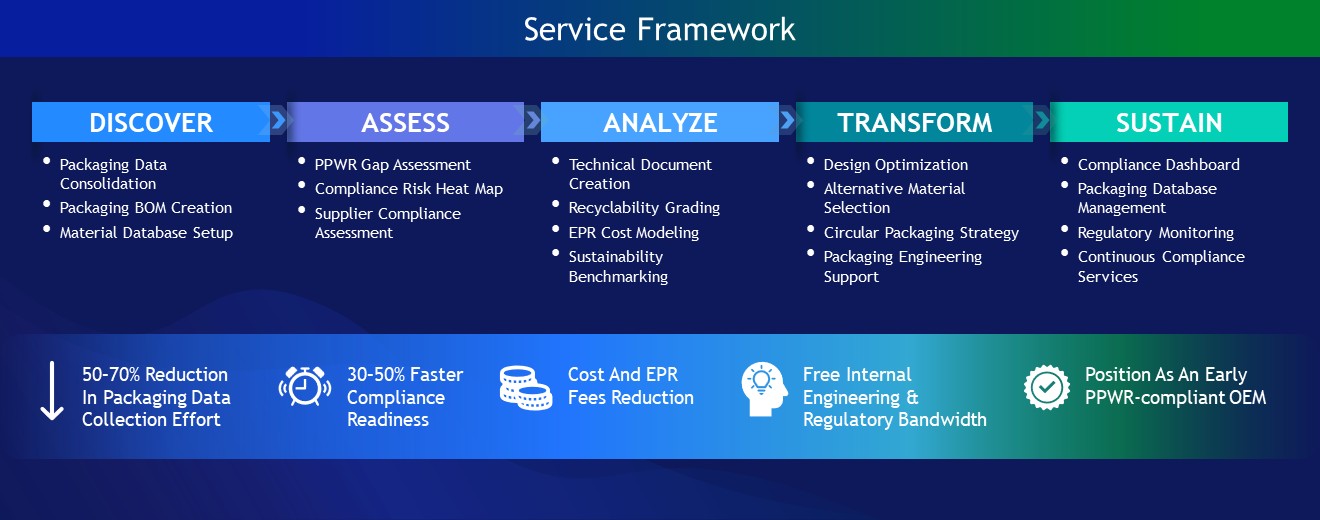
Tata Elxsi's PPWR Compliance Transformation Framework helps organizations transform packaging compliance into a sustainable business advantage. Combining packaging engineering, regulatory expertise, sustainability consulting, supplier collaboration, and AI-enabled intelligence, the framework enables manufacturers to establish packaging transparency, accelerate PPWR readiness, optimize packaging portfolios, and build long-term compliance capabilities while advancing circular economy goals.
Building Compliance Readiness
The first stage focuses on establishing a strong compliance foundation through packaging portfolio assessments, packaging inventory creation, supplier data collection, and regulatory gap analysis. By consolidating packaging data and identifying high-risk packaging components, organizations gain visibility into compliance exposure, remediation priorities, and opportunities to improve recyclability and sustainability performance.
Driving Sustainable Packaging Transformation
The second stage focuses on translating compliance requirements into actionable packaging strategies. Through recyclability assessments, labeling updates, EPR impact analysis, packaging redesign, material optimization, and Design-for-Recycling (DfR) initiatives, organizations can improve circularity, reduce environmental impact, lower EPR costs, and strengthen packaging sustainability while maintaining product performance and business objectives.
Sustaining Long-Term Compliance
The framework is supported by centralized packaging intelligence, digital dashboards, supplier collaboration, regulatory monitoring, and continuous compliance management. These enablers help organizations maintain visibility across packaging portfolios, respond proactively to evolving regulations, reduce compliance risks, and sustain PPWR readiness through a scalable and future-ready compliance ecosystem.
Why Tata Elxsi?
- Turn compliance into a strategic advantage by aligning packaging sustainability, circular economy objectives, and business growth with evolving PPWR requirements.
- Bridge policy and execution through a unique combination of regulatory insight, packaging engineering expertise, and sustainability-led transformation, ensuring practical and scalable outcomes.
- Make better packaging decisions through data-driven PPWR impact assessments, recyclability insights, and portfolio-wide sustainability intelligence.
- Reduce exposure to compliance, EPR, and market-access risks through proactive assessments, early gap identification, and structured transformation roadmaps.
- Deliver measurable business outcomes with up to 30-50% faster compliance readiness, 50-70% lower packaging data collection effort, improved packaging sustainability, and accelerated PPWR adoption across global portfolios.
In Focus




Information Hub
-
Does the PPWR apply exclusively to packaging manufacturers?
No. PPWR impacts all companies placing packaged products on the EU market, including OEMs, brand owners, importers, and distributors.
-
What is the most significant challenge organizations face in achieving PPWR compliance?
Data availability. Most organizations struggle with collecting accurate material, weight, recyclability, and supplier information across large packaging portfolios.
-
What impact will PPWR have on packaging costs?
Non-compliant packaging may lead to higher EPR fees, redesign costs, and market access risks. Early compliance helps minimize these costs.
-
How do we know if our packaging meets PPWR recyclability requirements?
Packaging must meet PPWR recyclability criteria and be assessed according to EU-defined recycling performance requirements. Please use our Free PPWR Readiness Self-Assessment Tool to assess your compliance.
-
What are the consequences of non-compliance with PPWR regulations?
Organizations may face market restrictions, product sales bans, increased compliance costs, regulatory penalties, and business disruptions.
-
What business benefits can organizations expect from achieving PPWR compliance?
Faster PPWR readiness, reduced compliance effort, lower compliance risk, and optimized packaging sustainability performance.
-
Can you support PPWR compliance for organizations with large packaging portfolios?
Yes. Our structured approach helps assess and manage thousands of packaging SKUs efficiently.
-
Do you provide digital solutions to support PPWR compliance and packaging data management?
Yes. Our solutions help centralize packaging data, automate assessments, and improve compliance visibility.