Autonomous driving is no longer confined to self-driving cars on public roads—it is rapidly redefining how industries operate. Across sectors such as mining, agriculture, construction, and logistics, autonomous machinery is enabling unprecedented levels of efficiency, precision, and safety. As organizations strive to optimize performance, reduce risk, and meet sustainability goals, autonomous systems are becoming a cornerstone of the next industrial revolution.
This shift is driving increased demand for Autonomous Off-Highway Equipment Engineering Services, which enable specialized machinery to operate safely and intelligently in rugged, complex environments. These services integrate advanced sensing technologies, AI-driven perception, machine control systems, and connected fleet management platforms to support reliable autonomous operations across off-highway industries. This article explores how autonomy is reshaping specialized machinery, the technologies enabling it, and what the future holds for industrial automation.
Beyond Passenger Vehicles: Autonomy in Industrial Settings
While consumer mobility often dominates headlines, some of the most impactful autonomy deployments are happening in controlled industrial environments. Mines, farms, and ports offer structured, geo-fenced spaces where predictability and safety requirements make autonomy a natural fit.
Modern autonomous machinery integrates advanced technologies such as:
- Sensor Fusion: LiDAR, radar, and computer vision for environmental awareness
- Artificial Intelligence (AI): Intelligent decision-making and navigation
- Precision Positioning: GPS (Global Positioning System) and RTK (Real-Time Kinematic) for centimetre-level accuracy.
- Edge Computing & Telematics: Real-time data processing and communication
Together, these capabilities enable machines to perceive, decide, and act autonomously, often outperforming manual operations in speed, safety, and consistency.
Industry Applications: Driving Change Across Sectors
Mining: Safer, More Productive Operations
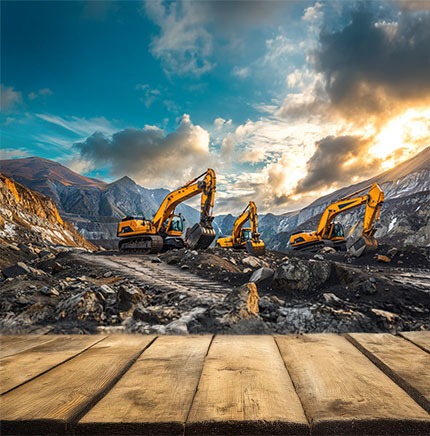
Mining was among the first industries to adopt autonomy. Driverless haul trucks, autonomous drills, and remotely managed fleets have significantly improved safety and productivity. Machines navigate harsh terrain, optimize routes, and operate continuously, reducing downtime and minimizing human exposure to hazardous conditions.
Agriculture: Precision and Sustainability
Autonomous tractors, sprayers, and harvesters are transforming farming practices. Using GPS, AI, and real-time analytics, these machines deliver precision planting, watering, and harvesting. The result? Higher yields, reduced resource waste, and more sustainable operations.
Construction: Smarter Job Sites
Autonomous excavators, bulldozers, and graders now execute tasks based on digital blueprints, ensuring millimeter-level accuracy. Combined with drone mapping and 3D modeling, construction sites are evolving into connected ecosystems that deliver faster, safer, and more cost-effective outcomes.
Logistics & Ports: Continuous, Connected Operations
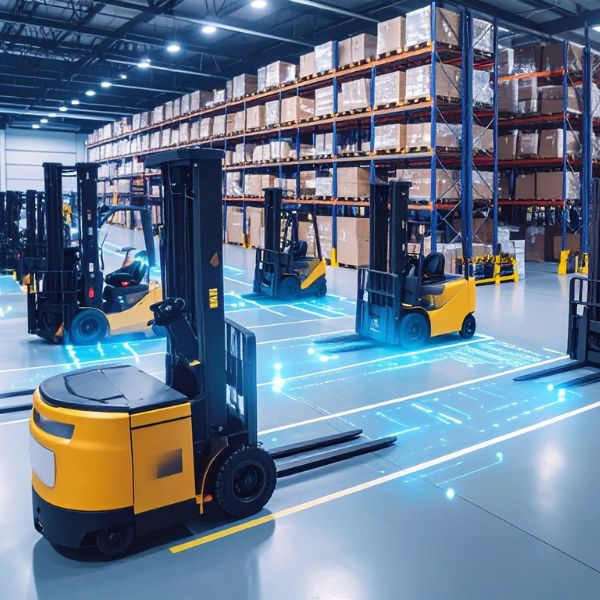
Material handling, driverless transport vehicles, cranes, and automated guided systems enable 24/7 operations in logistics and port management. AI-powered control centres optimise workflows, reduce errors, and improve asset utilisation, ensuring global supply chains remain resilient and efficient.
The Technology Ecosystem Behind Autonomy
Industrial autonomy relies on three core pillars:
- Artificial Intelligence (AI): Enables perception, learning, and adaptive decision-making
- Connectivity (5G, IoT, Edge Computing): Facilitates real-time communication and local processing
- Big Data & Predictive Analytics: Transforms operational data into actionable insights for maintenance and optimization
These technologies create self-optimizing networks where machines continuously learn and improve.
Business Benefits of Autonomous Machinery
- Enhanced Safety: Reduced human exposure to hazardous environments
- 24/7 Operations: Continuous productivity without shift limitations
- Operational Consistency: Precision and reliability across tasks
- Cost Efficiency: Lower downtime, optimised resource use, and reduced maintenance
Challenges in Achieving Full Autonomy
Despite its advantages, industrial autonomy comes with its share of challenges.
- Initial investment in technology and infrastructure can be substantial.
- Regulatory frameworks for autonomous operations are still evolving globally.
- Cybersecurity risks must be managed to protect connected systems and data.
Integration complexity arises when merging legacy equipment with advanced systems.
- Workforce transformation is essential, as operators evolve into system managers and analysts.
Addressing these challenges requires a combination of technological innovation, strategic planning, and strong digital transformation partnerships.
The Future: Human-Machine Collaboration
The future of specialised machinery is not purely autonomous, it is collaborative. We are entering an era of hybrid autonomy, where human operators oversee intelligent fleets of autonomous machines through centralised control systems.Rather than replacing human expertise, autonomy enhances it. Humans provide context, creativity, and problem-solving, while machines deliver precision, endurance, and data-driven decision-making.As AI, connectivity, and analytics continue to evolve, we will see the emergence of self-learning, interconnected ecosystems, where machines coordinate, adapt, and optimise operations across entire value chains.
Conclusion
Autonomous driving is reshaping far more than transportation — it is redefining how industries build, extract, grow, and move the world’s resources. By integrating AI, automation, and connectivity into specialised machinery, organisations can achieve higher safety, productivity, and sustainability standards. The result is a smarter, more resilient industrial future where autonomy is not just a technological milestone but a catalyst for transformation.
As industries embrace this shift, the partnership between human ingenuity and machine intelligence will pave the way for the next great leap in global productivity, one that is connected, autonomous, and intelligent by design.
Authors
Marketing Manager – Transportation Business
Tata Elxsi
Global Industry Head-Off Highway
Tata Elxsi