
News
Tata Elxsi at Tokyo Battery Summit: Insights on battery innovation, circularity and mobility
Date: Mar 02 2026
Publication: Iru-miru.com
Tata Elxsi Limited: End-to-End Battery Strategy for the EV Era from India
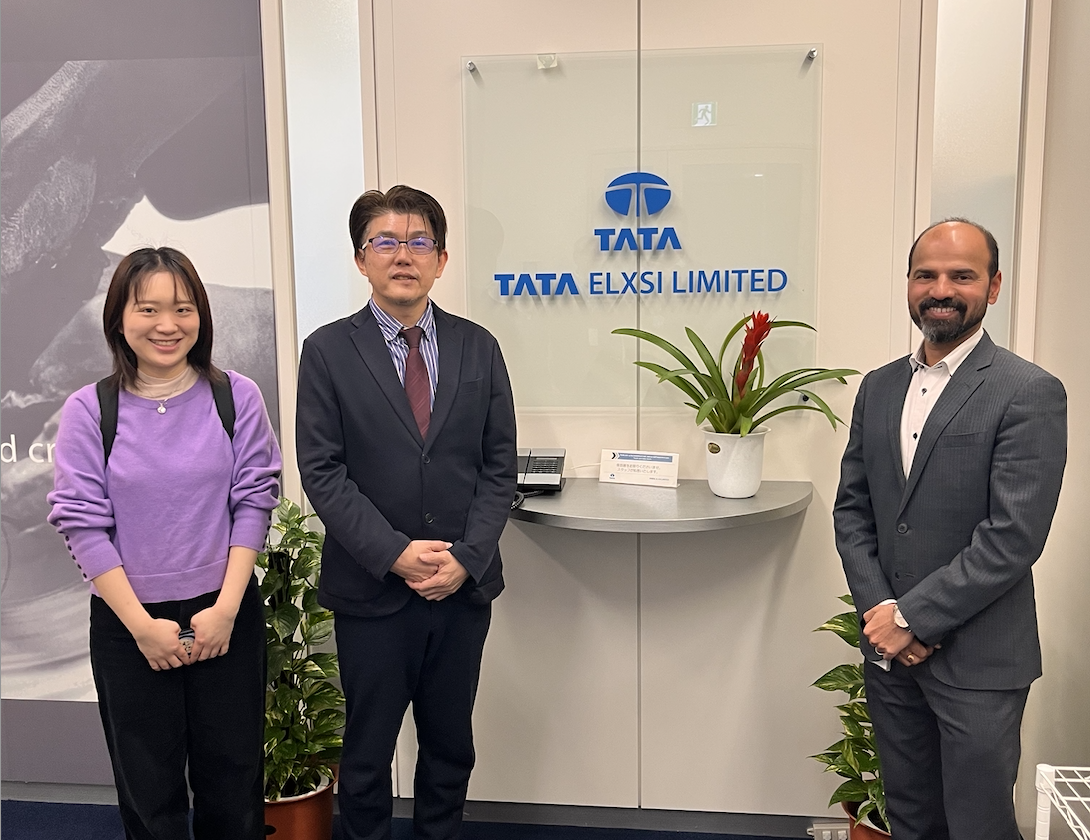
Ahead of the Tokyo Battery & Critical Materials Summit, MIRU is conducting a series of pre-event interviews with featured speakers. In this third installment, we spoke with Raman Kakarla, Head of the Japan Office at Tata Elxsi Limited. In this interview, he shared insights into Tata Elxsi’s business, its India-origin end-to-end battery strategy for the EV era, and the company’s engagement with Japan.
Q. First, could you tell us about your battery-related business?
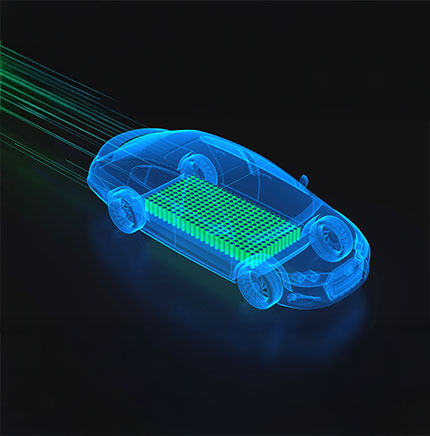
Ans. When it comes to batteries, Tata Elxsi plays a pivotal role behind the scenes of EV innovation.Tata Elxsi is not a manufacturer of EVs or batteries. We are a design and engineering services company focused on design, development, and software. In the EV electrification domain, Tata Elxsi is deeply involved in the design and engineering of EV battery packs across the full lifecycle—cell, module, pack, thermal, and BMS development.
Our capabilities include battery management systems (BMS), embedded software, electronic control design, system integration, testing and validation, and even support for recycling initiatives.

Q. What does “end-to-end” support mean in practical terms?
Ans. End-to-end support means, we engineer the battery with its entire lifecycle in mind, not just its first use in a vehicle.
As battery performance drops below automotive thresholds, it can still deliver significant value in ‘second phase’ applications like stationary energy storage.
At Tata Elxsi, we design systems from the outset to enable this transition that allows full cycle utilization —covering architecture, software, and integration. This effort goes beyond product development and reflects our circular, sustainability-driven technology approach.
Q. We understand you are also working on battery passport solutions.
Ans. Yes, with battery passport regulations becoming mandatory in Europe, this is a space we anticipated early. We already offer software IP that enables compliance, helping customers meet regulatory requirements without disrupting their development timelines. A major strategic initiative aligning to this is the Battery Aadhaar, powered by Tata Elxsi’s MOBIUS+ platform.
Essentially, every battery gets its own digital ID, allowing us to track everything from where itcame from to how it’s used across its lifecycle - allowing full lifecycle traceability of material data, manufacturer information, bill of materials (BOM), and usage history. Essentially, every battery gets its own digital ID, allowing us to track everything from where itcame from to how it’s used across its lifecycle - allowing full lifecycle traceability of material data, manufacturer information, bill of materials (BOM), and usage history.
It helps prevent unsafe reuse and noncompliance and supports circular economy and regulatory alignment across India, EU, Japan, USA.
A simple analogy would be Japan’s Individual Number system—each battery is assigned its own “personal ID.”
This solution is already being applied to vehicles intended for the European market.
Q. How would you describe the current situation in the Indian market?
Ans. The Indian EV market is undergoing a major transformation and has reached a critical growth inflection point. Strong consumer demand, supportive government policies, and rapid advancements in technology are accelerating adoption. At the same time, the ecosystem continues to mature, revealing both significant opportunities and structural challenges.
Earlier, the Indian market was largely driven by lead-acid batteries, especially for three-wheelers and stationary use. Today, that’s changing quickly. With EV adoption picking up pace, lithium-ion batteries are becoming the norm, and at the same time, domestic battery manufacturing is growing, creating local value and making the supply chain more resilient.
However, this rapid adoption brings new pressures - particularly on infrastructure. To keep pace with EV growth and maintain a smooth user experience, charging infrastructure must expand exponentially, not linearly.
At the same time, attention is increasing toward building recycling infrastructure in anticipation of a future rise in end-of-life batteries. Overall, India stands at a turning point of rapid growth, accelerating technological transition, and expanding domestic capability, balanced against the need for faster infrastructure scaling and long-term sustainability planning.
Q. As part of the Tata Group, what is your position within the organization?
Ans. As part of the Tata Group, Tata Elxsi has a clearly differentiated role. While vehicle manufacturing within the group is handled by companies such as Tata Motors Limited, Tata Elxsi operates as a design, engineering, and software services company with an AI-first approach.
Our focus is on enabling innovation through product design and development, embedded software, electronic control systems, and testing and validation, supporting both Tata Group companies and global external clients across their engineering journeys.
Q. Could you also tell us about your engagement with Japan?
Ans. We entered Japan nearly 30 years ago — one of the earliest Indian engineering companies to do so. Today, we support leading Japanese automotive OEMs, suppliers, electronics firms, and semiconductor companies with end‑to‑end design, engineering, and software services. To name a few strategic long-term engagements:
- Apls Alpine - Tata Elxsi has established a strategic longterm engagement with Alps Alpine and have a Global Engineering Centre focusing on nextgeneration automotive software for CASE solutions
- Renesas Electronics - Tata Elxsi and Renesas Electronics jointly established the Next Generation EV Innovation Center (NEVIC) that focuses on BMS, Motor Control Units, EV design & Engineering
- Nidec –The collaboration focuses on developing and localising software programs for India and global markets, while helping Nidec establish a global software development base for future mobility solutions.
- Panasonic – We have a dedicated R &D and Testing centre where Tata Elxsi supports Panasonic build next-generation intelligent, connected, and sustainable home appliances. The work spans AI, robotics, IoT, design engineering, and product innovation.
- Suzuki – The Suzuki - Tata Elxsi Offshore Development Centre in Pune is supporting Suzuki’s green mobility, next-gen powertrains, lightweight design, eco-friendly materials, safety, and software-defined vehicle development. While we have Suzuki’s first cloud-enabled Hardware-in-Loop (HIL) center in Trivandrum to support full-vehicle virtual testing, remote cloud access, and accelerate SDV (Software-Defined Vehicle) development.
Japan and India share strong industrial compatibility, and in recent years, interest in the Indian market has grown significantly among Japanese companies.
Q. What message would you like to share at the upcoming summit?
Ans. We bring strong global experience in end-to-end battery engineering, along with hands-on implementation of battery passport solutions. India is at a pivotal moment, marked by rapid EV adoption, expanding battery manufacturing, and the emergence of circular business models.
In this transformation, we see ourselves as a long-term technology partner, supporting the ecosystem through design, engineering, and digital innovation.
We place strong value on collaboration with Japanese companies, globally respected for their engineering excellence, quality discipline, and long-term vision, and we look forward to deepening these partnerships to co-create sustainable, future-ready mobility solutions in the years ahead.
Japanese version
Tokyo Battery & Critical Materials Summit開催を前に、MIRUでは登壇者への事前インタビューを実施ししている。第三回である本報では、Tata Elxsi Limited日本支社長であるRaman Kakarla氏にインタビュー。本インタビューではTata Elxsiの事業やインド発・EV時代に向けたエンドツーエンド・バッテリー戦略、日本との関わりについてお話を聞くことができた。
―まず、御社のバッテリー関連事業について教えてください。
EVイノベーションの現場において、Tata Elxsiは“縁の下の力持ち”として重要な役割を担っています。私たちはEV車両やバッテリーそのものを製造するメーカーではなく、デザイン、開発、ソフトウェアに特化した設計・エンジニアリングサービス企業です。
電動化分野では、セル、モジュール、パック、熱設計、BMS(バッテリーマネジメントシステム)に至るまで、EVバッテリーパックのライフサイクル全体にわたる設計・開発・エンジニアリングに深く関わっています。
具体的には、BMS開発、組込みソフトウェア、電子制御設計、システム統合、試験・検証、さらにはリサイクル対応の支援まで、幅広い技術サービスを提供しています。
―「エンドツーエンド支援」とは、具体的にどのような意味でしょうか。
エンドツーエンドとは、車両での一次利用だけでなく、バッテリーのライフサイクル全体を見据えて設計するという考え方です。
車載用途としての性能基準を下回った後も、バッテリーは定置型蓄電などのセカンドライフ用途で十分に活用することが可能です。
Tata Elxsiでは、こうした移行を前提に、アーキテクチャ、ソフトウェア、システム統合の段階から設計を行い、バッテリーのフルライフサイクル活用を実現します。これは単なる製品開発にとどまらず、循環型・サステナビリティ志向の技術アプローチそのものです。
―バッテリーパスポートのソリューションにも取り組まれていると伺いました。
はい。欧州でバッテリーパスポートの義務化が進む中、この分野には早期から取り組んできました。現在では、開発スケジュールに影響を与えることなく規制対応を可能にするソフトウェアIPを提供しています。
その中核となるのが、当社のMOBIUS+プラットフォームを活用した「Battery Aadhaar」という取り組みです。
これは、すべてのバッテリーにデジタルIDを付与し、原材料の由来、製造情報、部品構成(BOM)、使用履歴などをライフサイクル全体にわたって追跡可能にする仕組みです。
不適切な再利用や規制違反の防止に加え、インド、EU、日本、米国における循環経済や規制対応にも貢献します。
イメージとしては、日本のマイナンバー制度のように、バッテリー一つひとつに「個別ID」が付与される仕組みです。このソリューションは、すでに欧州市場向け車両に適用されています。
―現在のインド市場の状況について、どのように見ていますか。
インドのEV市場は現在、大きな転換点を迎えています。消費者需要の拡大、政府の支援政策、技術進展が相まって、EV普及は急速に進んでいます。
従来は三輪車や定置用途を中心に鉛蓄電池が主流でしたが、現在はリチウムイオン電池への移行が急速に進んでいます。また、国内での電池製造も拡大し、サプライチェーンの強靭化と付加価値の国内創出が進んでいます。
一方で、急速な普及はインフラ面での課題ももたらしています。EVの増加に対応するためには、充電インフラの飛躍的な拡充が不可欠です。
さらに、将来的な使用済みバッテリーの増加を見据え、リサイクルインフラ整備の重要性も高まっています。インドは現在、急成長、技術転換、国内能力の強化が進む一方で、インフラ整備と長期的な持続可能性対応が求められる重要な局面にあります。
―Tataグループ内での御社の位置づけについて教えてください。
Tata Elxsiは、Tataグループの中でも明確に差別化された役割を担っています。車両製造はTata Motorsなどが担当する一方、当社はAIを中核とした設計・エンジニアリング・ソフトウェア企業として、製品設計、組込みソフト、電子制御、試験・検証などの分野でイノベーションを支援しています。
Tataグループ各社に加え、世界中の顧客企業の開発プロセスを支援しています。
―日本との関わりについても教えてください。
当社は約30年前に日本市場に参入し、インドのエンジニアリング企業としては早い段階から事業展開を行ってきました。現在では、自動車OEM、サプライヤー、電子機器メーカー、半導体企業など、日本の主要企業に対し、設計・開発・ソフトウェアサービスを提供しています。
主な協業事例としては、
- Alps Alpine:CASE向け次世代車載ソフトウェアのグローバル開発拠点
- Renesas Electronics:BMSやモーター制御などを開発するEVイノベーションセンター
- Nidec:将来モビリティ向けのグローバルソフトウェア開発体制の構築
- Panasonic:AI・IoT・ロボティクス分野を含む次世代家電の研究開発支援
- Suzuki:SDV開発や車両仮想試験に対応する開発センター
日本とインドは産業面での相性が高く、近年は日本企業のインド市場への関心も大きく高まっています。
―今回のサミットに向けたメッセージをお願いします。
当社は、エンドツーエンドのバッテリーエンジニアリングに関するグローバルな経験と、バッテリーパスポートの実装実績を有しています。
現在のインドは、EV普及の加速、電池製造の拡大、循環型ビジネスモデルの台頭など、大きな転換期にあります。
こうした変革の中で、私たちは設計、エンジニアリング、デジタル技術を通じて、エコシステムを支える長期的な技術パートナーとして貢献していきたいと考えています。
高い技術力と品質文化、長期的な視点で世界的に評価される日本企業との協業を重視しており、今後も連携を深めながら、持続可能で次世代のモビリティ社会の実現に共に取り組んでいきたいと考えています。